ONTONOMOS/ on-TÓ-no-mos /
An ontology describes your infrastructure.
Ontonomos governs it.
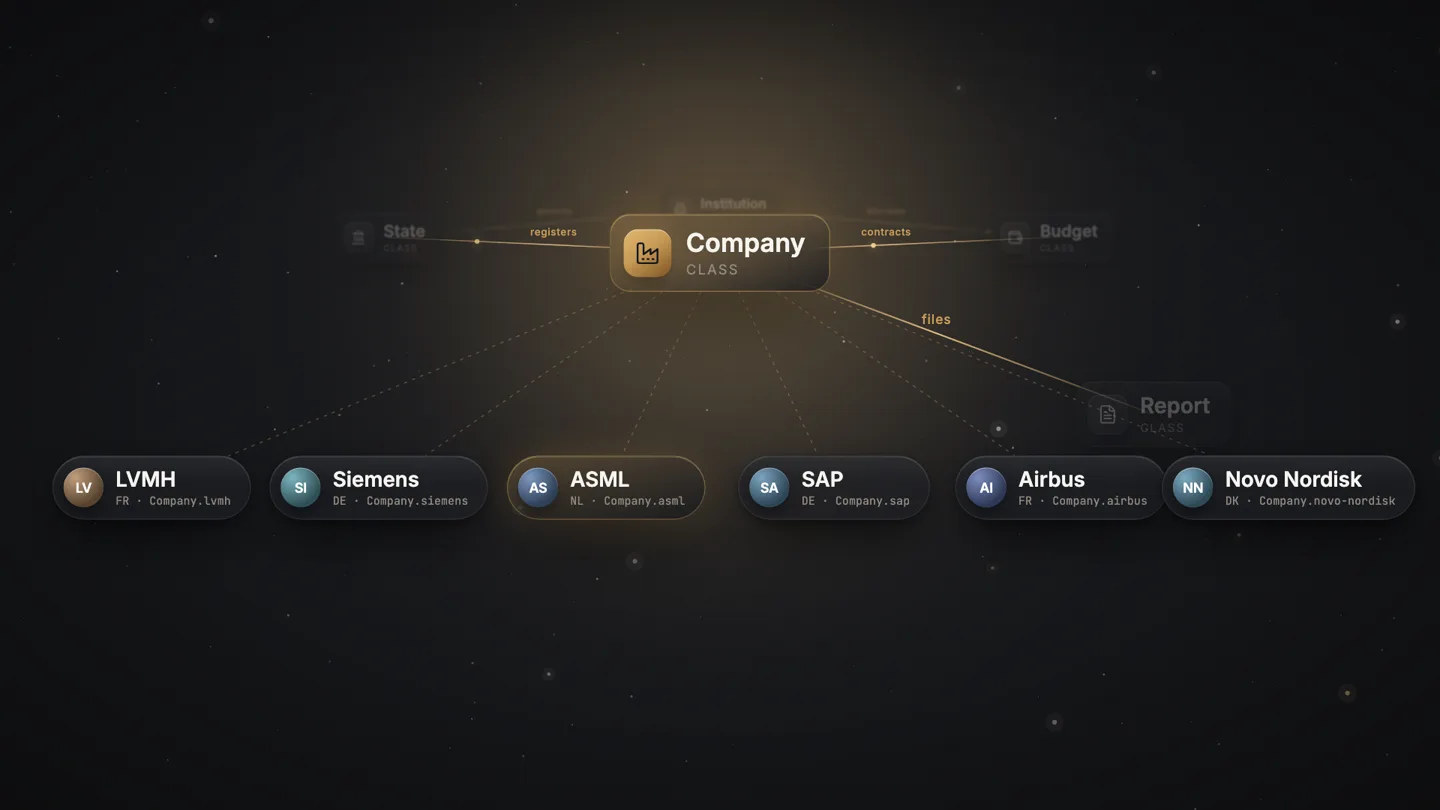
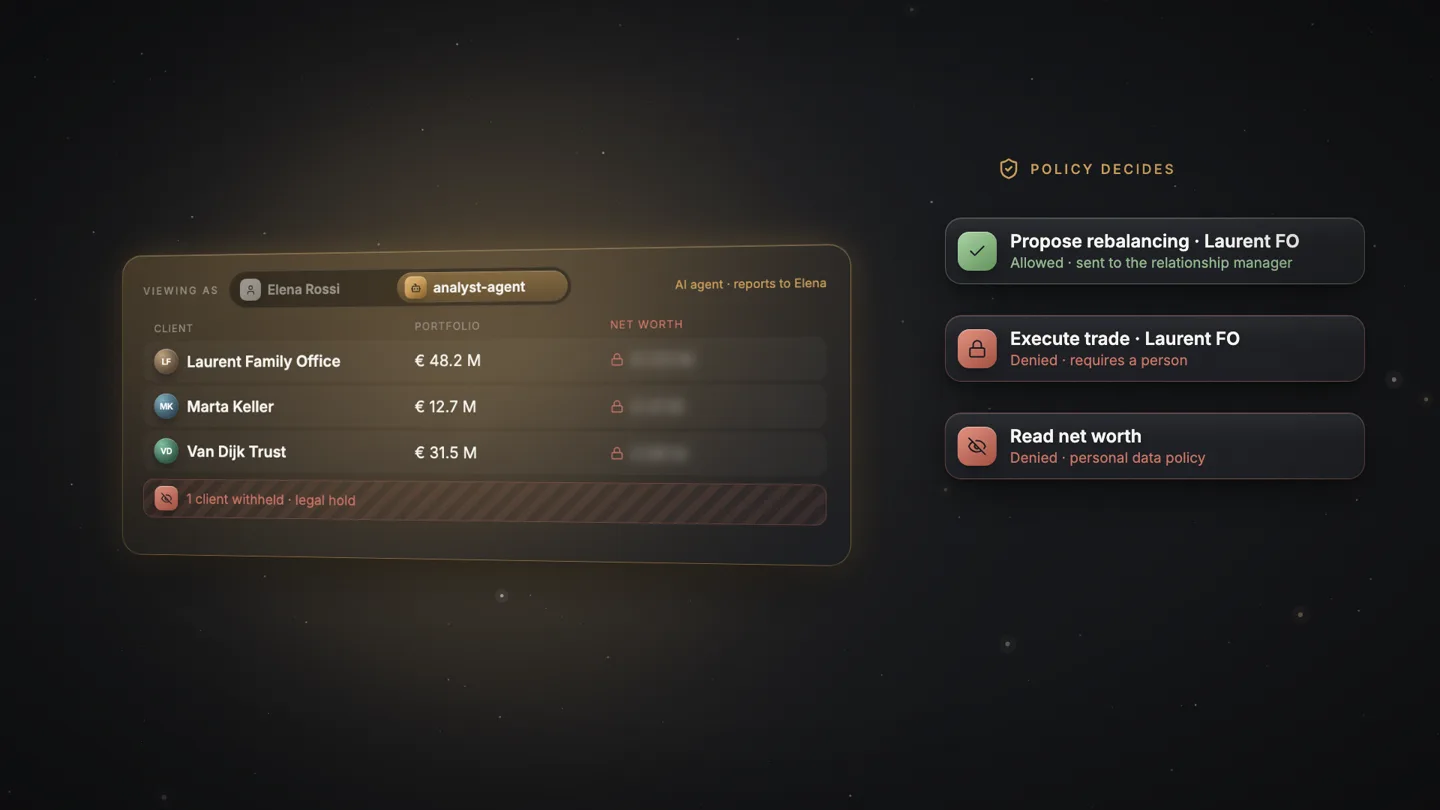
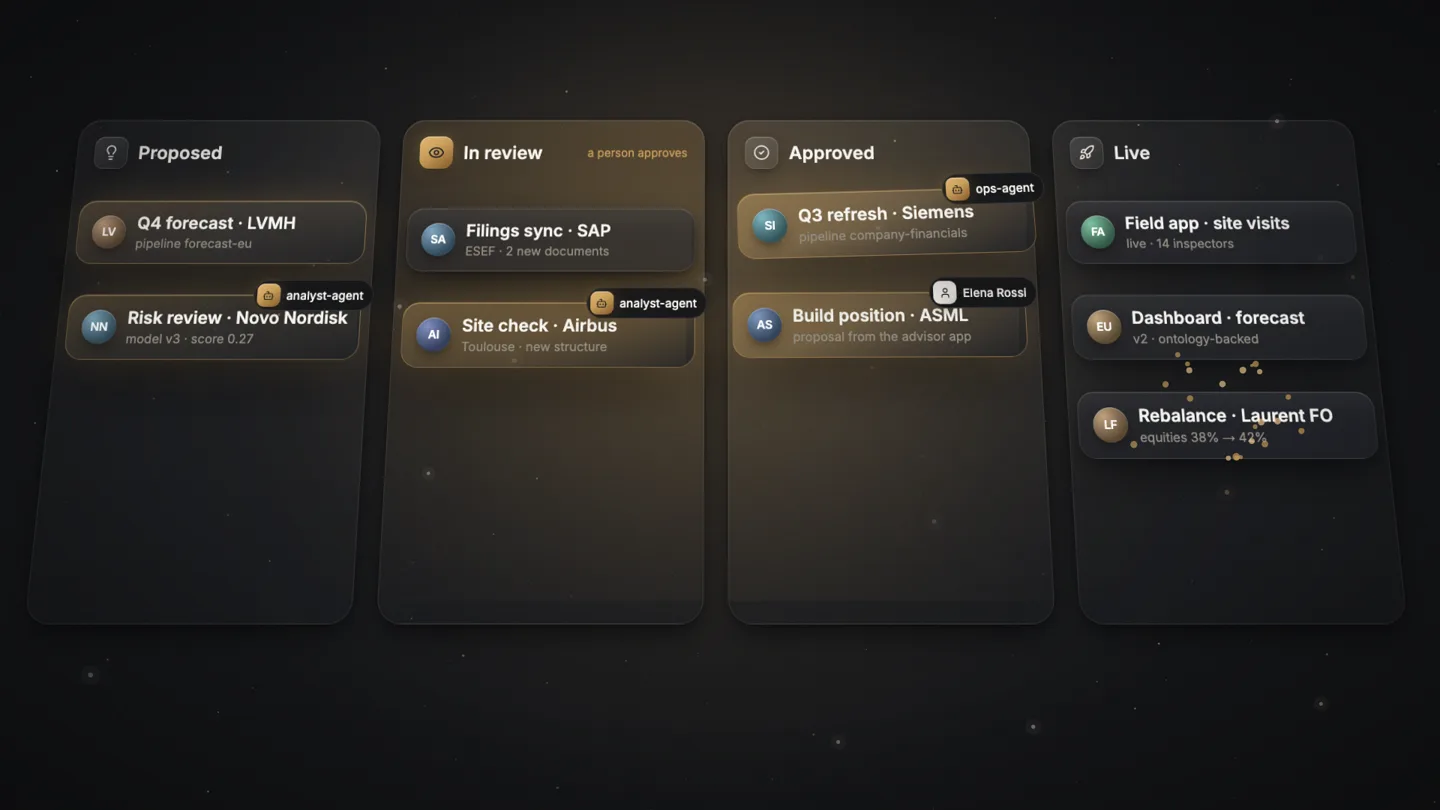
Ontonomos is a schema-driven control plane. Schemas define what may exist, policies decide who may see and change it, bindings anchor every class to the data source where its instances live, and actions are the governed way anything changes.
In active development
Schemas — what may exist
LinkML class definitions are the single source of truth. Types are generated from the schema, validated against it, and versioned with it — the model is never a comment on the code.
Policies — who may see and change it
Policy-as-code decides visibility and mutation at the query layer, not in application code. Governance is a rule you can read, test, and version.
Bindings — where it lives
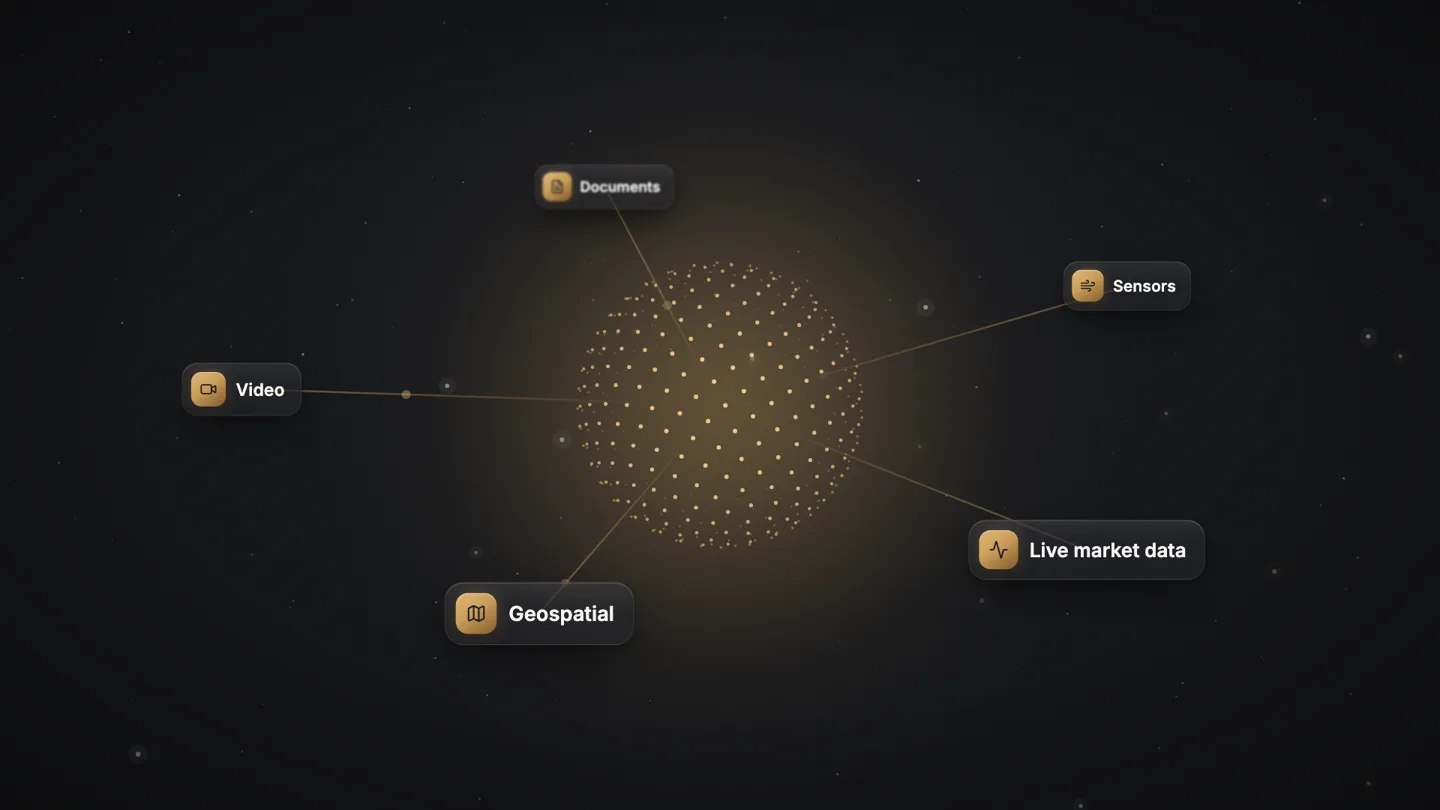
Classes bind to the data sources their instances actually live in — databases, files, live probes. What is running is a query, never a curated copy.
Actions — how it changes
Start, stop, publish: change is declared on the class and executed by the control plane. Nothing moves by hand, so everything that moves is accounted for.
The word
Ontonomos is a coined Greek compound: ὄν / ὄντος — being, that which exists — and νόμος — law, order, governance. Together: “that which governs being.”
onto·logy
λόγος — word, account. “The account of being”: it describes what exists.
onto·nomos
νόμος — law, order. “The governor of being”: it governs what exists.
A new coinage in an old tradition — Greek built its words for stewardship the same way:
- οἰκονόμος (steward of the house) → economy
- ἀστρονόμος (orderer of the stars) → astronomy
- κυβερνήτης (helmsman) → Kubernetes
“Ontology” itself is a coinage too — Neo-Latin, 1606.